Qui va sortir amb Rotllà?
Aude data de Rotllà de ? fins a ?.
Rotllà
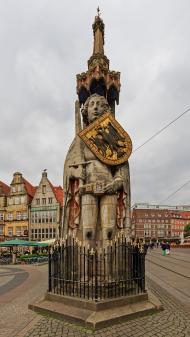
Rotllà, Rotlà (o Rotllan i Rotlan) és un personatge protagonista de diverses llegendes europees, les quals sembla que es van originar a partir d'un personatge real, un cavaller franc que va viure al segle viii, contemporani de Carlemany i prefecte de la marca de Bretanya. Les seves gestes, explicades en poemes, formen part de la matèria de França que va estar tan de moda en les corts d'aquella època. Segons en quin idioma es tractava aquest tema, el mateix personatge apareix escrit de diferents maneres: Hruodland en franc, Rotland en occità, Orlando en italià, Roeland en germànic, Roldán en castellà i Errolan en basc. La fama del personatge va transcendir l'edat mitjana, l'època en què va sorgir, i va continuar inspirant artistes d'èpoques posteriors: poetes, pintors, músics. A Catalunya és un important personatge de les rondalles populars que configuren la mitologia catalana.
llegir més...Aude
Aude, or Alda, Alde, was the sister of Oliver and betrothed of Roland in The Song of Roland, and other chansons de geste. The story of her engagement to Roland is told in Girart de Vienne.
In The Song of Roland Aude is first mentioned by her brother Oliver when he tells Roland that the two will never be married, when the two counts are arguing before the battle; they are later reconciled, but both die fighting the Saracens. When Charlemagne returns to Aix and informs Aude that Roland has died, she collapses at the Emperor's feet and dies of grief. In the poem Aude is not a romantic character, but a heroine of drama and even melodrama, she is a leading literary character, on a par with the heroes. Love, treated at greater length still takes on no courtly hue, it is a tragic and absolute love, as in heroic works.
"The Lovely Alda" is part of Edward MacDowell's 1891 orchestral composition, Two Fragments after the Song of Roland.
llegir més...