Qui va sortir amb Bilistikhe?
Ptolemy II Philadelphus data de Bilistikhe de ? fins a ?.
Bilistikhe
Belèstica (en grec antic: Βελεστίχη o Βιλιστίχη) o Bilistique va ser una cortesana (hetera) d'època hel·lenística i d'origen incert.
Segons Pausànias era d'origen macedoni, Ateneu de Nàucratis diu que era d'Argos, d'una antiga casa reial grega i Plutarc la fa una esclava estrangera comprada al mercat. Va guanyar a les curses de cavalls als Jocs Olímpics de l'any 264 aC i més endavant es va convertir en amant de Ptolemeu II Filadelf amb el qual va tenir un fill, Ptolemeu de Jònia, i després va ser divinitzada amb el nom d'Afrodita Bilistica. Segons Climent d'Alexandria va ser enterrada sota el santuari de Serapis a Alexandria.
llegir més...Ptolemy II Philadelphus
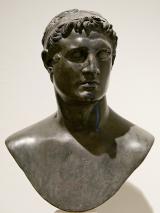
Ptolemy II Philadelphus (Ancient Greek: Πτολεμαῖος Φιλάδελφος, Ptolemaîos Philádelphos, "Ptolemy, sibling-lover"; 309 – 28 January 246 BC) was the pharaoh and basileus of Ptolemaic kingdom from 284 to 246 BC. He was the son of Ptolemy I, the Macedonian general of Alexander the Great who founded the Ptolemaic Kingdom after the death of Alexander, and Queen Berenice I, originally from Macedon.
During Ptolemy II's reign, the material and literary splendour of the Alexandrian court was at its height. He promoted the Museum and Library of Alexandria. In addition to Egypt, Ptolemy's empire encompassed much of the Aegean and Levant. He pursued an aggressive and expansionist foreign policy with mixed success. From 275 to 271 BC, he led the Ptolemaic Kingdom against the rival Seleucid Empire in the First Syrian War and extended Ptolemaic power into Cilicia and Caria, but lost control of Cyrenaica after the defection of his half-brother Magas. In the Chremonidean War (c. 267–261 BC), Ptolemy confronted Antigonid Macedonia for control of the Aegean and suffered serious setbacks. This was followed by a Second Syrian War (260–253 BC) against the Seleucid empire, in which many of the gains from the first war were lost.
llegir més...